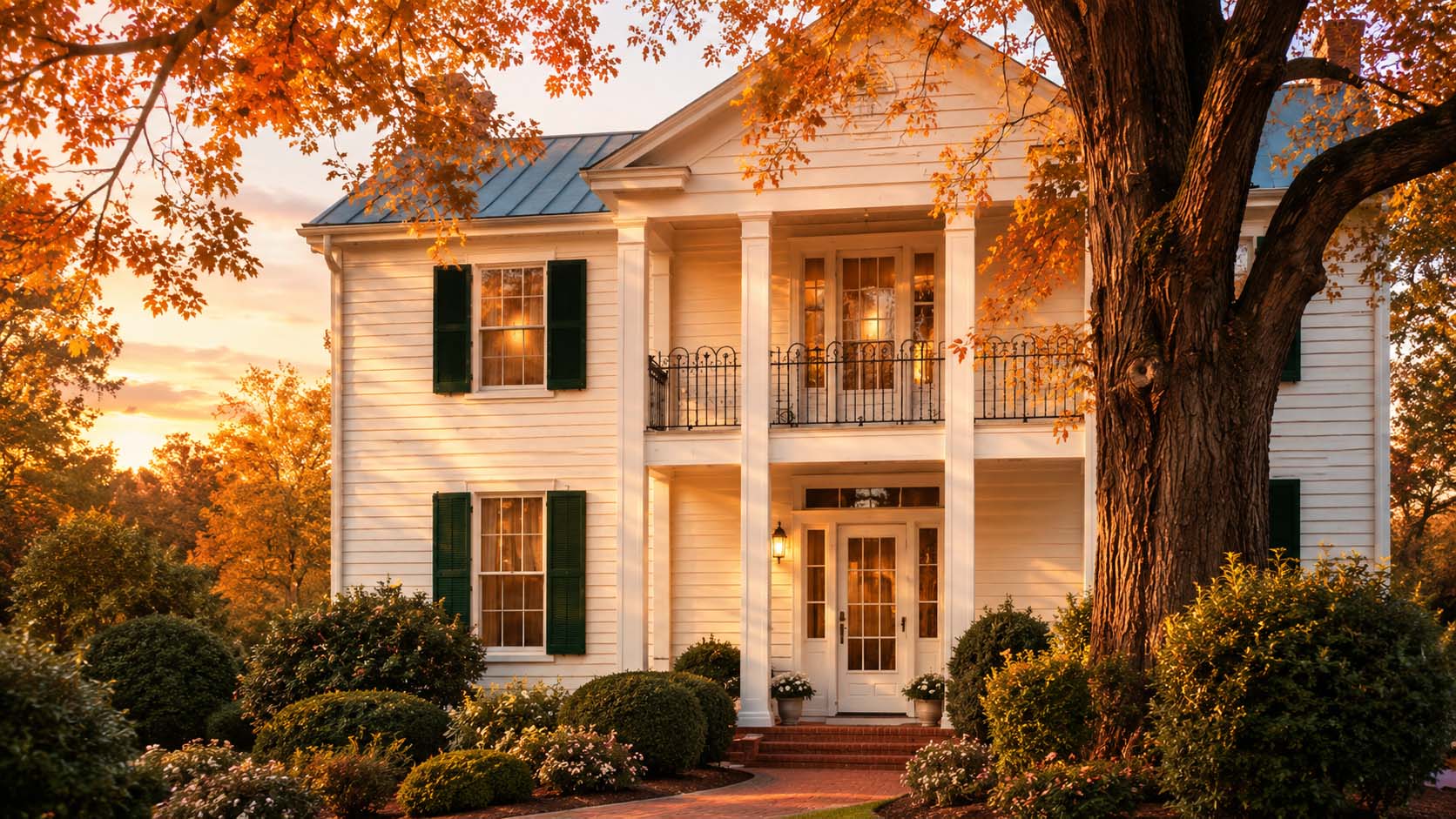
Historic Homes & Virginia Estates
Charlottesville Historic Homes for Sale
Historic Residences • Country Estates • Farms • Homes with Acreage
Explore Charlottesville historic homes for sale, from early Virginia residences and gracious country estates to preserved farmhouses, Federal and Victorian homes, and architecturally significant properties with acreage throughout Albemarle County and Central Virginia.
History, Architecture & a Lasting Sense of Place
Historic Homes Offer More Than Age. They Offer Character That Cannot Be Recreated.
Charlottesville and the surrounding Central Virginia countryside contain an exceptional range of older and historic residences. Some are formal country estates with documented provenance and significant acreage. Others are early farmhouses, village homes, or twentieth-century residences distinguished by craftsmanship, architectural integrity, mature landscapes, and a strong connection to their setting.
Buyers may be drawn to original floors, hand-worked woodwork, substantial masonry, period mantels, gracious proportions, old gardens, dependencies, barns, and the quiet presence that develops over generations. Yet every historic property is different. Condition, restoration quality, additions, mechanical systems, restrictions, acreage, and location all shape how the home will live today.
Bridget Archer helps buyers look beyond the surface and understand the complete property—its architecture, history, updates, land, setting, practical needs, and long-term suitability.
Current Historic Home Listings
Explore Charlottesville and Central Virginia Homes Built Before 1940
Search current listings for older and historic homes throughout Charlottesville, Albemarle County, and Central Virginia. The collection may include early farmhouses, historic town residences, country estates, Victorian homes, twentieth-century classics, and properties with acreage, barns, guest houses, or additional historic structures.
The search is based on year built. A home’s age does not necessarily mean that it is formally designated, listed on a historic register, or subject to preservation restrictions. Bridget can help you investigate the distinction before you purchase.
Looking Beyond the Architecture
What Buyers Should Consider Before Purchasing a Historic Home
The most successful historic-home purchase balances emotional appeal with careful due diligence. Original character matters, but so do the quality of previous work, the condition of major systems, the property’s legal status, and the practical demands of long-term ownership.
Architectural Integrity
Original Features & Later Changes
Evaluate original materials, windows, floors, masonry, millwork, mantels, room proportions, additions, and renovations. Thoughtful updates should support modern living without erasing the qualities that make the home distinctive.
Condition & Systems
Structure, Utilities & Restoration
Foundations, roofs, drainage, chimneys, electrical service, plumbing, heating and cooling, insulation, wells, septic systems, and the workmanship of prior restorations deserve careful review by qualified professionals.
Land & Dependencies
Setting, Acreage & Supporting Structures
Historic barns, guest cottages, smokehouses, offices, gardens, walls, drives, and mature landscapes may contribute materially to the property’s significance, usability, maintenance needs, and overall value.
Central Virginia Architectural Character
From Early Virginia Simplicity to Gracious Estate Architecture
Historic homes in Charlottesville and Central Virginia span many periods and traditions. Buyers may encounter early vernacular farmhouses, Georgian and Federal residences, Greek Revival influences, Victorian-era homes, Colonial Revival architecture, and twentieth-century country houses designed with enduring proportion and craftsmanship.
Architectural style is only part of the story. The setting, approach, relationship to the land, surrounding dependencies, documented ownership, and quality of preservation often determine whether a property feels like an older house or a truly significant historic place.
Across Albemarle, Orange, Madison, Nelson, Greene, Fluvanna, and Louisa counties, these homes appear in town, village, farm, and estate settings—each with a different balance of history, privacy, acreage, and access to Charlottesville.

Historic Status & Property Rights
Historic Does Not Always Mean Restricted
An older home may be described as historic because of its age, architecture, or local importance without being formally listed or protected. Other properties may be located within a local historic district, included on a state or national register, subject to a preservation easement, or affected by private covenants and conservation restrictions.
These distinctions can affect exterior changes, additions, subdivision, tax considerations, land use, and future improvements. Buyers should review the recorded documents and applicable local requirements rather than relying on a listing description alone.
- Confirm whether the property has any formal historic designation.
- Review preservation and conservation easements in full.
- Understand local historic-district review requirements.
- Investigate zoning, subdivision rights, and permitted uses.
- Verify the history and documentation represented in the marketing.
- Determine whether tax credits or incentives may apply to future work.
- Discuss insurance and financing requirements early.
- Use inspectors and contractors familiar with older construction.
Selling a Historic Home
A Historic Property Should Be Understood Before It Is Marketed.
Historic homes cannot be positioned accurately through square footage, acreage, and automated estimates alone. Architecture, provenance, restoration quality, original materials, additions, dependencies, setting, restrictions, condition, and buyer demand all influence value.
Bridget Archer creates refined, property-specific marketing for Charlottesville historic homes and Central Virginia estates. The process may include research into the home’s history, careful documentation of architectural details and improvements, professional photography, editorial copy, a detailed brochure, video, a dedicated property webpage, and exposure through specialized historic, country, farm, and estate property platforms.
The goal is not simply to tell buyers that a home is historic. It is to show them why the architecture, land, setting, and story make the property irreplaceable—and to support that presentation with disciplined pricing and experienced representation through McLean Faulconer, Inc.
Warning: include(/home/countryestates/www/www/includes/contact-photo.php): Failed to open stream: No such file or directory in /home/countryestates/www/www/charlottesville-historic.php on line 728
Warning: include(): Failed opening '/home/countryestates/www/www/includes/contact-photo.php' for inclusion (include_path='.:/usr/local/php81/lib/php') in /home/countryestates/www/www/charlottesville-historic.php on line 728
Frequently Asked Questions
Charlottesville Historic Homes
What qualifies a home as historic in Charlottesville?
The word historic may refer to a home’s age, architecture, documented history, or importance within its community. It does not automatically mean that the property is formally designated, listed on a historic register, or subject to preservation restrictions.
Are historic homes more difficult to maintain?
Maintenance depends on the home’s condition, materials, restoration history, systems, and complexity. A thoughtfully maintained historic home may function very well, while a property with deferred work may require specialized contractors, materials, and planning.
Can a historic home be renovated or expanded?
Often, yes. The degree of flexibility depends on local zoning, historic-district requirements, preservation easements, conservation restrictions, private covenants, and the physical characteristics of the property. Buyers should verify these matters before planning major work.
What should buyers inspect in an older home?
Buyers should examine the structure, foundation, roof, drainage, masonry, chimneys, electrical service, plumbing, heating and cooling, insulation, wells, septic systems, additions, and the quality of previous renovations. Inspectors familiar with older construction can be especially valuable.
Do historic homes hold their value?
Historic character and architectural rarity can support strong buyer interest, but value still depends on condition, location, acreage, restrictions, restoration quality, functionality, market demand, and pricing. Age alone does not guarantee value.
How should a Charlottesville historic home be marketed for sale?
The marketing should document the home’s architecture, history, original features, restoration work, setting, acreage, dependencies, and practical improvements. Strong photography, thoughtful research, editorial storytelling, targeted exposure, and disciplined pricing help buyers understand what makes the property significant.